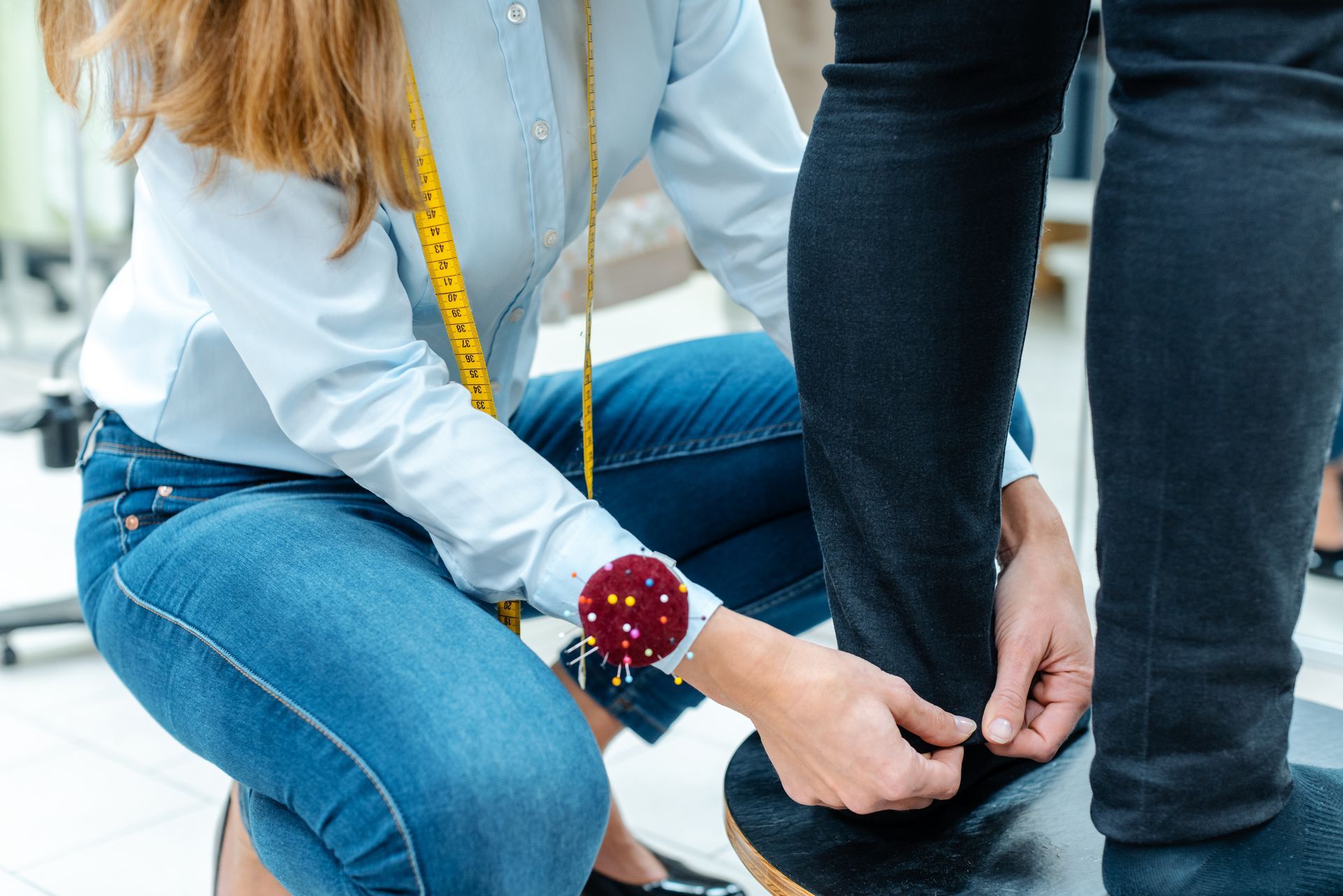
alterations for dress
If you’re wondering whether alterations for a dress will save a nearly-right fit or become an expensive project, start with the seams and the areas that need to change. A quick check can help you decide whether to ask a tailor for an estimate before committing.
Key Takeaways
- Checking the seam allowances first tells you how much room a tailor has to let a dress out or take it in.
- Getting an estimate before you commit helps you avoid surprise costs on a bigger alteration project.
- Pilgrim's on-site tailors at six Twin Cities locations can look at your dress and tell you what changes are realistic.
- All 28 Pilgrim locations accept simple mending if your dress only needs a small fix.
- Stop by your neighborhood Pilgrim or call the tailor line at a participating store to get started.
Here’s the good news: a dragging hem or slipping straps may be straightforward to address. The more a dress needs reshaping, the more its construction and details matter.
Can This Dress Be Altered? The 5-Minute Check Before You Spend a Dime
A dress is often a good alteration candidate when the change is modest and its seams, lining, and fabric allow the tailor to work. A dress that is two sizes too small may be difficult to fit, especially through the bust or hips, unless the seams have enough extra fabric. Ask for an in-person assessment before buying or approving work.
How to Check Seam Allowance Before You Buy (or Before You Drop Off)
Turn the dress inside out and look at the seam allowance: the fabric between the stitched seam and the raw edge. An overlock stitch or narrow allowance can mean little fabric is available to let out. Check the lining separately, too; it must allow the same adjustment as the outer fabric.
Boning, a zipper, lace, beading, pleats, or patterned fabric that must line up can make changes harder. Don’t cut or unpick anything yourself. A tailor can inspect the garment and explain which areas have room to change.
Buy to Fit the Largest Measurement: Why Taking In Beats Letting Out
When shopping, prioritize the measurement that is hardest to alter, often the bust or hips, then ask whether the rest can be taken in. Reducing excess fabric is frequently more practical than adding room, since letting out depends on seam allowance and a matching piece of fabric may not be available.
If the dress is tight in several areas, don’t assume changing by a fixed number of sizes will solve it. Bring your measurements and the dress to a tailor for advice before purchase. Fit, fabric, cut, and construction all affect what is possible.
Quick Decision Tree: Alterable, Salvageable, or Walk Away
- Likely alterable: The dress fits comfortably in its key areas, and the main issue is a hem, strap length, or a small amount of excess fabric.
- Needs an assessment: The dress is tight, has a lined or structured bodice, or includes delicate trim. Ask for a fitting and written estimate before proceeding.
- Consider walking away: The dress is tight across multiple areas, has little seam allowance, or needs extensive changes that could alter its shape. If the estimate approaches the cost of another suitable dress, compare your options before deciding.
For a professional assessment, Pilgrim Dry Cleaners. Professional Tailoring & Alterations offers in-person fittings with precise measurements at six tailor shop locations. Bring the shoes and undergarments you expect to wear; they can affect the fit and hem length.
Dress Alteration Costs: What Common Services Really Run
How much do dress alterations cost? There isn’t one reliable price for every hem, strap adjustment, or bodice change. The amount depends on the garment’s construction, the work involved, and the tailor’s current pricing. Ask for an itemized estimate after the dress has been examined, especially if several changes are needed.
Typical Price Ranges for Hems, Taking In, Straps, and Bustles
Use the table as a guide to the work involved, not as a price quote. A simple hem on an unlined skirt differs from shortening a layered gown; taking in a plain side seam differs from reshaping a structured bodice. A bustle depends on the gown’s train and how its layers are built.
| Service | What affects the estimate | Ask the tailor |
|---|---|---|
| Hem | Layers, lining, fabric weight, and edge finish | Will every layer be shortened? |
| Taking in | Seam access, fit area, and garment structure | Will the change affect the dress’s shape? |
| Straps | Strap design and any attached trim | Will the adjustment change the neckline? |
| Bustle | Train length, fabric layers, and attachment points | Can you show me how to fasten it? |
What Drives the Price Up: Beading, Trim, and Bodice Rebuilds
Detailed work takes more handling. Beads, sequins, lace, and decorative trim may need removal and reattachment around a seam or hem. Multiple skirt layers can need separate adjustments. A bodice rebuild changes the bodice’s structure or fit; it is more than a quick nip at a side seam.
Ask which changes are essential and which are optional. If the work involves extensive reconstruction, request the tailor’s explanation and estimate before approving it. Then you can decide whether to proceed.
The Nordstrom Alterations Price List, Explained Honestly
The Nordstrom alterations price list PDF is a two-column document, with alteration services alongside listed prices. Nordstrom’s service page and price list are the primary sources for its current offerings and posted rates. A list can help you identify work to ask about, but may not cover every fabric, garment detail, or custom request.
Use a listed rate as a reference for the described service, not a guaranteed total for your dress. Confirm what the quote includes, whether separate layers or decorative details add work, and when the garment will be ready. For a local estimate, Pilgrim Dry Cleaners. Professional Tailoring & Alterations handles garment alterations, including formalwear and wedding gowns. Ask a tailor to assess your dress before approving the work.
Wedding Dress and Formal Alteration Timelines: Plan Backward From the Date
A wedding or formal event gives your tailor a firm deadline, so book an assessment as soon as you have the dress. Alterations may involve fittings, adjustments, and a final try-on; timing depends on the garment and the work. Pilgrim Dry Cleaners lists most tailoring as completed within one week, with more complex work taking longer. That is a general turnaround, not a wedding-gown deadline. Share your event date and ask the tailor to confirm a schedule before approving the work.
How Far Ahead to Book and How Many Fittings to Expect
There is no single fitting schedule for every gown. A hem adjustment may need less coordination than changes to a structured bodice, multiple skirt layers, or a bustle. At your first fitting, wear the shoes and undergarments you plan to use for the event. Bring the dress in its garment bag and tell the tailor when you need it ready.
Ask how many fittings the work requires and when each should happen. Leave time before the event for a final try-on and any small corrections. If your schedule is tight, say so at the first appointment rather than assuming the shop can fit in extra work later.
Same-Day and Rush Alterations: A Walkthrough From a Cleaner With On-Site Tailors
Searching for “same day alterations near me” can turn up options, but a search result does not confirm that a particular dress can be finished that day. Pilgrim has on-site tailors at six locations, while all 28 locations accept simple mending. Same-day availability depends on the location, the tailor’s schedule, and the garment’s needs. Don’t count on a wedding gown or detailed formalwear being eligible for rush work.
- Call the location: Describe the dress, the change needed, and your deadline. Ask whether an on-site tailor can assess it.
- Bring the dress for assessment: The tailor can inspect its construction, pin the requested change, and explain whether the timing is realistic.
- Agree on the plan: Confirm the estimate, fitting schedule, and pickup date before authorizing work.
- Try it on before the event: Check the fit and movement, and make sure any bustle or closure works as expected.
Pilgrim Dry Cleaners. Professional Tailoring & Alterations offers in-person fittings with precise measurements at six tailor shop locations. Call the location directly about rush timing and any applicable fee; don’t assume same-day service is available for every garment.
What to Ask Before You Drop Off Your Dress
Before leaving your dress, ask who will assess the work, which changes the estimate includes, and whether the schedule includes a fitting and final try-on. Confirm the completion date and what to do if your event plans change. Write down the agreed changes so you and the tailor share the same expectations.
- Can you complete this work by my event date?
- Will I need another fitting before pickup?
- Does the estimate include every layer or detail being altered?
- Should I bring my event shoes or undergarments to the fitting?
Choosing a Trustworthy Alteration Specialist (and Avoiding the Horror Stories)
A rushed purchase can leave you unsure whether a specialist is offering practical advice or pushing more work. You deserve a clear explanation of what can be changed, what the work involves, and when the dress will be ready. For wedding dress alterations near me, look for a fitting process that includes measurements and discussion of your event date, rather than relying on a quick estimate from a photo.
Red Flags at Bridal Shops and High-Pressure Sales Tactics
Be cautious if you are urged to buy or approve alterations before someone checks the fit. A specialist should explain why a change is recommended and provide an estimate before starting. Take time to consider a large reconstruction, especially when beading, lace, or several layers make the work more involved.
Ask for a written description of the changes and expected completion date. If you feel pressured to decide immediately, pause and seek another assessment. A second opinion can help you judge whether the proposed work matches your fit concerns.
Why On-Site Tailors at a Dry Cleaner Change the Equation
An on-site tailor gives you a place to discuss the garment and its fit in person. At Pilgrim’s six tailor shop locations, fittings include precise measurements. The Pilgrim Dry Cleaners. Professional Tailoring & Alterations service covers formalwear and wedding gowns, along with other garment types. It is a local option when you want a tailor to assess the dress directly.
Pros
- In-person measurements help the tailor assess fit on the garment.
- You can discuss the event date and requested changes directly.
- Group fittings are available for entire wedding parties.
Cons
- On-site tailoring is available at six locations, not every Pilgrim store.
- Same-day or rush timing depends on the dress and tailor availability.
- Complex work may need more time and additional fittings.
Check which stores have an on-site tailor and call to discuss your dress and deadline. A direct conversation helps you understand the next step without approving work before the garment has been assessed.
When Alterations Go Wrong: Stains, Damage, and Your Next Steps
Finding a stain, tear, or unexpected fit problem after an alteration is upsetting, especially with an event coming up. Pause before attempting a home fix. Photograph the issue, keep your receipt and paperwork, and contact the shop promptly so it can inspect the dress and discuss what happened.
What to Do if Your Dress Comes Back Stained or Damaged
Check the garment as soon as you pick it up, preferably before leaving. If you notice a mark or damage, point it out and ask the shop to record the concern in writing. Take clear photos in good light, including a wider view showing where the problem sits. Don’t wash, spot-treat, or alter the area yourself; home treatments can affect delicate fabric, dye, trim, or later stain removal.
Ask the shop to inspect the dress and explain the next step. A tailor or cleaner can assess whether the issue may be addressed, but don’t assume a stain can be removed. Keep communication factual and save messages, estimates, and revised completion dates.
Refunds, Compensation, and Dry Cleaning Recourse: A Step-by-Step Path
- Document the concern: Photograph the spot or damage and note when you first noticed it.
- Contact the shop: Describe the issue, share the photos, and request an inspection.
- Ask about resolution: Find out whether the shop proposes a repair, cleaning assessment, or another remedy, and request the plan in writing.
- Keep records: Save the original work order, payment receipt, messages, and any cleaning or repair estimate.
- Escalate calmly if needed: If you cannot agree on a next step, ask for a manager’s review and check the shop’s written policies before pursuing further options.
Refunds or compensation depend on the circumstances and the shop’s policies, so don’t assume a particular outcome. A clear timeline and saved documentation can make the discussion more productive.
Pre-Drop-Off Protection: Documenting Condition and Cleaning First
Before handing over a dress, photograph the front, back, hem, closures, and existing marks or loose trim. Point out stains, snags, missing beads, and areas needing repair, then ask that the requested work and condition notes appear on the work order. If the dress needs cleaning, ask whether cleaning before alterations suits its fabric and care label. Cleaning can reveal the garment’s condition, but it does not guarantee every mark will come out.
Keep the paper trail. A written alteration request, condition photos, and a dated receipt give you a useful record if questions come up later.
For a fitting and garment assessment, Pilgrim Dry Cleaners. Professional Tailoring & Alterations offers in-person measurements at six tailor shop locations. Ask the tailor to note existing condition concerns before approving alterations for dress. Pilgrim Dry Cleaners. Professional Tailoring & Alterations can also assess whether the requested work fits the garment’s construction.
Frequently Asked Questions
How much do dress alterations cost?
Dress alteration costs depend on the garment's construction, the work involved, and the tailor's current pricing, so there is no single reliable price for every hem or strap adjustment. The best move is to bring the dress in for an in-person look and ask for an itemized estimate after the garment has been examined, especially if several changes are needed.
Can this dress be altered or am I wasting time and money?
A dress is often a good candidate when the change is modest, like a hem, strap length, or a small amount of extra fabric. If the dress is tight across several areas or has little seam allowance, the project may cost more than the dress is worth, so get a fitting and written estimate before committing.
How do I know if a dress has enough seam allowance to let out?
Turn the dress inside out and look at the fabric between the stitched seam and the raw edge. A generous allowance means a tailor may have room to work, while an overlock stitch or narrow allowance usually means there is little fabric to let out. Check the lining separately, since it must allow the same adjustment.
Can a dress that is two sizes too small be altered to fit?
A dress two sizes too small is usually difficult to alter, especially through the bust or hips, unless the seams have plenty of extra fabric. Letting out depends on seam allowance, and a matching piece of fabric may not be available. Bring the dress and your measurements to a tailor for an honest assessment before buying.
What is a bodice rebuild and when is it needed?
A bodice rebuild is alteration work that changes the bodice's structure or fit, and it goes beyond a quick nip at a side seam. It is often needed when a lined or structured bodice requires significant reshaping. Because it is extensive reconstruction, ask the tailor to explain the work and provide an estimate before approving it.
When should I schedule alterations for a wedding dress or formal event?
Book an assessment as soon as you have the dress, since your event date gives the tailor a firm deadline. Most tailoring at Pilgrim Dry Cleaners is completed within one week, with more complex work taking longer. Bring the shoes and undergarments you plan to wear, since they affect the fit and hem length.
Why should I buy a dress to fit my largest measurement?
Taking a dress in is usually more practical than letting it out, because letting out depends on available seam allowance and matching fabric. Shop for the measurement that is hardest to alter, often the bust or hips, then ask a tailor whether the rest can be taken in.