how to remove oil stains from pants
Oil on your favorite pants can look alarming, but quick, careful steps may help before the stain settles in. To learn how to remove oil stains from pants, lift away excess oil, check the care label, and keep the spot out of the dryer until you know it’s gone.
Key Takeaways
- Blot fresh oil stains right away with a clean cloth, since rubbing can push the oil deeper into the fabric.
- Check the care label before treating anything, because different fabrics need different cleaning approaches.
- Keep stained pants out of the dryer, as heat can set the oil and make it much harder to remove.
- Old stains and stains that have already been washed may still respond to careful treatment, so don't give up too soon.
- If a stain has set in or the fabric requires special care, bring the pants to your neighborhood Pilgrim, where the sooner you bring an item in, the better the chances of removal.
The right next step depends on how fresh the mark is and what the fabric can handle. Here’s a practical way to treat a new spot without spreading it or risking the pants’ color.
First Things First: Blotting and Prep Before Any Treatment
Before reaching for a cleaner, protect the fabric and check the garment. Oil can spread when rubbed, and a product that works on sturdy cotton may not suit delicate or dry-clean-only pants. Choose a treatment that fits the care label.
Blot, Don't Rub: Stop the Oil from Spreading
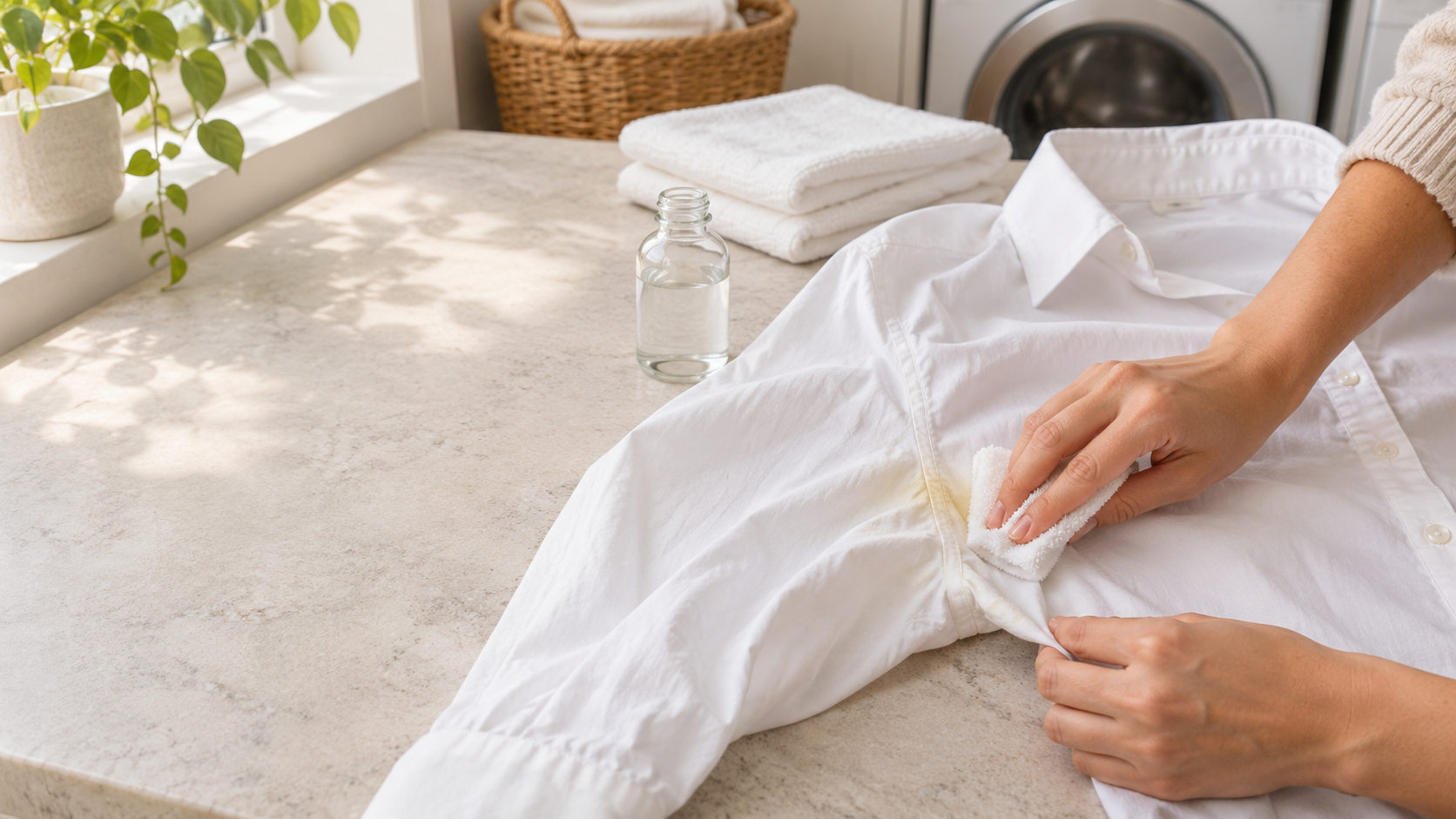
Lay the pants on a clean, absorbent surface. Gently blot the spot with a paper towel or clean cloth, working from the outside edge toward the center. This helps lift excess oil without pushing it farther into the weave. Use a clean section of towel as the oil transfers.
- Do: Blot gently and use a fresh part of the towel as oil transfers.
- Don't: Scrub, rub, or add water right away. Friction can spread the mark, and water alone won’t lift greasy residue.
Check the Care Label Before You Touch Anything
Read the care label before applying a stain product. It tells you whether the pants can be machine washed, what water temperature to use, and whether they require professional dry cleaning. If the label says “dry clean only,” or the fabric is delicate, stop home treatment and ask a cleaner for advice. Follow the label even if a general stain tip suggests another approach.
Patch Testing for Colored and Dark Pants
For colored pants, test the product on a hidden area, such as an inside seam. Apply a small amount, wait briefly, then blot with a clean white cloth and check for color transfer or fading. Don’t treat the stain if the test changes the fabric’s color or finish. On dark garments, a pale residue or faded patch can stand out.
Fresh Oil Stains: The 10-Minute Fix That Works
For a fresh, washable garment, absorb excess oil, pretreat the remaining spot, then wash according to the care label. The Tide oil-stain instructions recommend pretreating before laundering and checking the item before drying. The goal is to lift the grease before heat has a chance to set what remains.
Step 1: Cover the Spot with an Absorbent Powder
After blotting, cover the mark with cornstarch or baking soda. These powders can absorb some surface oil while you prepare to pretreat. Let the powder sit for about 15 to 30 minutes, then brush it away gently. If the fabric still looks oily, repeat once. Avoid pressing the powder into the fibers, which can make cleanup harder.
Step 2: Pretreat with Dish Soap
Apply a small amount of liquid dish soap to the remaining spot and gently work it into the fabric with your fingertips. Dish soap is made to cut grease on dishes, making it a practical first choice for a fresh oily mark on washable pants. Let it sit for about 10 minutes, then rinse according to the care label. Check product directions and test a hidden area before using a spray product or stronger cleaner.
How Long Each Product Needs to Sit (Timing Cheat Sheet)
Treatment time depends on the product and stain. For a same-day spot, start with these short waits, then check the fabric before washing. If the mark remains, follow the product label and care instructions rather than assuming a longer soak is better.
| Treatment | Starting wait | Next step |
|---|---|---|
| Cornstarch or baking soda | About 15 to 30 minutes | Brush away, then inspect the spot |
| Liquid dish soap | About 10 minutes | Rinse as directed by the care label |
Wash, Air-Dry, and Check Before the Dryer
Wash the pants using the care label’s instructions and the usual amount of laundry detergent. Before drying, inspect the treated area in good light. If you can still see or feel an oily mark, don’t apply heat. Air-dry the pants and check the stain again before deciding what to do next.
Old and Set-In Stains: The Escalation Ladder
If a stain has dried or survived a wash, try treatments one at a time. Start with the gentlest option suited to the care label, checking the fabric after each attempt. For washable pants, that usually means detergent first, then a color-safe oxygen bleach product if its label allows. Don’t combine stain removers or jump straight to a stronger treatment. With how to remove oil stains from pants, a careful order matters more than piling on products.
Try This First: Heavy-Duty Detergent and Enzyme Pretreaters
Apply a heavy-duty liquid laundry detergent or a labeled enzyme pretreatment to the mark, following the product directions. Let it sit for the stated time, then wash according to the pants’ care instructions. Enzyme formulas vary, so check that the product suits the garment and stain. For colored pants, test a hidden area first. Inspect the spot before drying; if it remains, move to the next option rather than adding heat.
Next Rung: Oxygen Bleach Soaks (with Colorfastness Warnings)
If detergent pretreatment hasn’t cleared the mark, consider an oxygen bleach soak only when the garment and product labels permit it. Oxygen bleach differs from chlorine bleach, but it can still affect some dyes or finishes. Test an inside seam first, and don’t soak wool or an item the product excludes. Use the listed concentration and soak time, then wash as directed. Stop if the test area fades or changes texture.
Last Stop at Home: Hydrogen Peroxide and Baking Soda Paste
A paste made with baking soda and hydrogen peroxide is a cautious last home attempt, not a guaranteed fix. Use it only on washable pants after checking the care label and testing a hidden spot for color change. Avoid it on delicate fabrics, and don’t apply it to dark or brightly colored pants unless the test confirms the dye remains unchanged. Don’t mix it with other cleaners. If the mark persists after one careful attempt, stop rather than scrubbing harder or repeating treatments indefinitely.
Why Old Stains Turn Darker, and What That Means
Oil can attract dust and other soil, making an older spot look darker. Washing may also leave oily residue visible once the surrounding fabric is clean. A darker mark doesn’t prove the pants are ruined, but it can signal that oil remains in the fibers. Use this comparison to choose a next step, not as a promise of removal.
| Treatment rung | Best fit | Color and fabric check | Move on when |
|---|---|---|---|
| Heavy-duty detergent or enzyme pretreatment | Washable pants with a dried or once-washed stain | Follow both labels; test colored fabric | The mark remains after washing |
| Oxygen bleach product | Eligible washable garments after detergent | Check colorfastness and product exclusions | The mark persists or the fabric changes |
| Peroxide and baking soda paste | A final cautious attempt on suitable washable fabric | Patch-test; avoid delicate or color-sensitive items | One careful attempt does not help |
Already Through the Washer and Dryer: Can Your Pants Be Saved?
Finding oil stains on clothes after washing can feel discouraging, especially when the dryer has run. The pants may still improve with another careful treatment, but heat can make oily residue harder to remove. Avoid another dryer cycle until the spot is gone or a cleaner has assessed it. If the care label says dry clean only, skip home soaking and take the pants to a professional cleaner.
What Dryer Heat Actually Does to an Oil Stain
Heat can make a remaining stain more difficult to lift. It doesn’t mean every mark is permanently set, but repeated washing and drying is a poor next step. Examine the area in good light and check whether the stain feels greasy or looks darker than the surrounding cloth. Don’t iron over it; more heat can add to the problem before you know whether treatment worked.
A Second-Chance Method for Washed and Dried Pants
For washable pants, start with a detergent or pretreatment product whose label allows use on the fabric. Apply it to the stained area, wait as directed, then wash according to the garment label. Air-dry and inspect before deciding whether to repeat or seek help. This is a second chance for a stubborn mark, not a certainty. If color shifts, the fabric feels different, or the spot remains after careful treatment, stop at home.
When to Stop Treating and Call a Professional Cleaner
Choose professional cleaning when the pants are marked dry clean only, made of delicate fabric, or too important to risk with another product. It’s also a sensible next step after a careful home attempt fails. Tell the cleaner what caused the stain, when you noticed it, whether the pants went through the washer and dryer, and which products you applied. That information helps them assess the garment and select an appropriate approach. No stain treatment can promise removal.
Fabric Matters: Denim, Chinos, Polyester Blends, and Wool
Fabric changes how much home treatment is sensible. Denim and many cotton chinos may tolerate label-approved washing, while blends can react differently depending on their fibers and finish. Wool needs special care and shouldn’t get a general soak unless its label and product directions allow it. If you’re unsure, pause rather than guess.
| Pants fabric | Practical next step |
|---|---|
| Denim | Check the label; use washable-garment treatment only if permitted. |
| Chinos | Follow the care label and patch-test products on colored fabric. |
| Polyester blends | Check both the garment and product labels before pretreating. |
| Wool | Skip general home soaks; ask a professional cleaner for guidance. |
Your Oil Stain Toolkit: Products Compared at a Glance
The best product depends on the stain’s age and the pants’ care label. For a fresh spot on washable fabric, absorbent powder followed by liquid dish soap is a practical start. For a stain that has dried or been washed, move gradually through label-approved laundry treatments. No method works for every stain, so stop if the fabric changes or the mark persists.
Which Product Wins for Which Stain Age
Use this as a decision guide, not a reason to layer cleaners. Let one treatment finish, inspect the fabric, and only then decide whether to try another option.
| Stain stage | First choice | Next step | When to stop |
|---|---|---|---|
| Fresh, not washed | Cornstarch or baking soda, then liquid dish soap | Wash as the care label directs; air-dry and inspect | If color or texture changes |
| Old or washed once | Heavy-duty detergent or a suitable enzyme pretreatment | Consider label-approved oxygen bleach on colorfast fabric | If the spot remains after careful treatment |
| Washed and dried | A fabric-compatible pretreatment, used as directed | Air-dry and assess before trying anything stronger | For delicate pants or a persistent stain |
Quick Reference: Safe Methods by Pant Fabric
- Denim and cotton chinos: Use washable-fabric treatments only when the care label permits.
- Colored or dark pants: Patch-test first; avoid products that change the dye or finish.
- Polyester blends: Follow the garment and product labels, since blends and finishes vary.
- Wool or dry-clean-only pants: Skip home soaking and ask a professional cleaner.
And If All Else Fails, Here's the Good News
A stubborn mark doesn’t automatically mean your favorite pants are ruined. If home treatment hasn’t helped, or the fabric is delicate, bring them to a professional cleaner. Explain what caused the stain, when you noticed it, and which products you used. We can assess the garment and discuss appropriate care, though no stain treatment can promise removal.
Frequently Asked Questions
Does baking soda remove grease from pants?
Yes, baking soda can help absorb surface oil from a fresh stain on washable pants. Cover the spot with baking soda or cornstarch, let it sit for 15 to 30 minutes, then brush it away gently. If the fabric still looks oily, repeat once before pretreating with dish soap and washing.
Can I use Dawn and baking soda to remove oil stains?
Yes, for washable pants this combination is a practical home approach. Start by letting baking soda sit on the spot to absorb oil, brush it away, then work a small amount of liquid dish soap into the fabric with your fingertips. Let it sit about 10 minutes, rinse per the care label, and check the spot before any dryer heat.
How do I get an old, set-in oil stain out of pants?
For a set-in oil stain, work up a gentle ladder of treatments rather than piling on products at once. Try a heavy-duty liquid detergent or enzyme pretreatment first, following product directions, then consider a color-safe oxygen bleach soak if both labels allow it. Always test a hidden seam first and inspect the spot before drying.
How can I remove oil stains from denim jeans?
Blot fresh oil gently, work from the outside edge toward the center, then cover the spot with baking soda or cornstarch to absorb the grease. After brushing the powder away, pretreat with dish soap and wash according to the care label. Denim is sturdy, but check the spot in good light before drying, since heat can set what remains.
Why should I air-dry pants instead of using the dryer after treating an oil stain?
Dryer heat can set a remaining oil stain, making it much harder to remove. That's why Whirlpool's guidance and Tide's instructions both recommend checking the garment before drying. Air-dry the pants and inspect the treated area in good light first, and keep the dryer out of the process until the spot is truly gone.
When should I take oil-stained pants to a dry cleaner instead of treating them at home?
If the care label says dry clean only, or the fabric is delicate, skip home treatment and ask a professional cleaner for advice. Some stains also become permanent if they're left too long or treated the wrong way, so sooner is better. Stop by your neighborhood Pilgrim, and our team will take a look.
How long should each oil stain treatment sit on the fabric?
Timing depends on the product. Let cornstarch or baking soda sit for about 15 to 30 minutes before brushing it away, and let liquid dish soap sit about 10 minutes before rinsing. If the mark remains, follow the product label rather than assuming a longer soak is better.